Say “Si Si” in Central America in 2013
Travel Story Series @ Hon Too Fang 2018
This is a travel account to a few far-away exotic places.
In mid-October 2013, a small group of senior citizens, led by LM, went to Cuba, Guatemala and Mexico to look at places exactly half a globe away. For 1 month.

Why Mexico?
There is a story. Earlier this year Joe and I were having supper at the Cantonese heartland of Pudu. Several boisterous youths on the next table were arguing on the risk of football betting. And my friend Peter called to ask me where would be my next travel destination. At that exact moment one young man was shouting at the others in Cantonese, “mei say kor eh?” or "haven’t you die before!" And Peter, who had hearing problem, thought I was saying “Me-xi-co” and said, “Oh, Mexico? Why not!” Yes, why not indeed. So Mexico we went.
What to See
What to see there? Well, in Cuba we have a rare real communist country, in Guatemala we have a very poor country with many minority tribes, and in Mexico we have the most populous Spanish-speaking country in the World. In fact all 3 countries use Spanish as their official language. "Si si" is yes, yes. So we are seeing very different cultures and ways of life there. There are many UNESCO World Heritage Sites for us to see and brag later. Not to mention the old Marian shrine of Our Lady of Guadalupe, off Mexico City, a must for all Catholics.
** Part 1: Cuba **
Cuba is essentially an island shaped like a sea cucumber, with an area of about 110,000 sq km, or about one-third of Malaysia.
The Cuban faces
The population is 11 millions, 65% whites, 10% blacks and 24% mixed ancestry. The blacks are descendants of former slaves “imported” from Africa. See, 3rd photo, Jimmy Carter is Cuban!


History of Cuba
Before the arrival of the Europeans, Cuba was inhabited by Amerindian tribes. On October 28, 1492, Christopher Columbus landed on Cuba. The 1st Spanish settlement was established in 1511. It soon became part of the colonial New Spain. The 1st fight for independence started in 1868 and the Republic of Cuba was finally formed in 1902. In 1956 Fidel Castro began his Marxist revolution and the communist state was established in 1959. Shown the Cuban flag and the capital building, built in 1929 and modelled after the one in Washington DC, but with a taller dome.


Communist one-party rule
Cuba is one of the few true communist countries in the World. Practically everything is owned by the state. The head of a household has a little ration book where he can buy predetermined amount of foodstuff at greatly subsidised prices. For example a pound of flour may cost 15 Pesos but in the open market it could well cost 150 Pesos or 10 times more. So at least people won’t go hungry. And of course foreigners cannot buy such subsidized stuff. In fact foreigners are forbidden to use the local currency. Foreigners have to use a currency called “Convertible Peso” or in short CUC. It is pegged to the US$. Shown the ration book of our guide and the CUC. Have you seen a currency note of 3 denomination? 3 RM, or 3 US$ or 3 Euro? But we have a note worth 3 CUC. Communists are simply different loh!


US trade embargo
In 1960 when the communist took over Cuba and nationalized the assets of everybody, including US citizens and companies, the US government imposed its trade embargo on Cuba. No Cuban product can be imported into the US, no US company can do any business in Cuba, etc, etc. It is a law. No business ties at all.
Losing the business of the largest economy in the World, Cuba’s economy declined until today. And the people suffer. Suffer greatly in a backward country. For example internet is still not available in homes. Only businesses can have that and speed is still terribly slow, according to our guide. See the giant display of the internet sign at the lobby of a seaside resort hotel. So proud to have internet connection! Because of imposing the embargo US presidents are mocked in cartoons in the Museum of Revolution, two shown.


Classic American cars
After US started their trade embargo in 1960, no new American cars came in. And the pre-1960 cars became classics and many became taxis. Our guide said many are fitted with new engines. Only the body is original. A unique sight only in Cuba.


F & B: cigar and rum
Cuba is still very much an agricultural country. The main exports are sugar, tobacco and seafood. And of course the Cuba cigar is World famous. The one shown is priced at 425 CUC for 5, or about RM 300 each. The most expensive one at the shop we went to is priced at RM 500 each. May be RM 10 a puff. If you can afford it why not? Just like our premium durian, the Musang King, a mouthful could cost RM 10 too.
Cuba is also famous for her rum, which is an alcoholic beverage distilled from the fermentation of sugarcane. Priced according to the age, just like whisky. A famous brand is Havana Club, founded in 1878.


Cuban music
Cuba is also famous for its popular music, a fusion of Spanish melodies and African rhythm. The old mambo, cha-cha, then rumba and salsa, all originated from Cuba. Bands and individuals (with a guitar) sing in street corners, cafes, everywhere, to earn a living. The most well-known Cuban song is of course Guantanamera, written by one Jose Fernandez Diaz in 1929.
Guantanamera, guajira Guantanamera, Guantanamera, guajira Guantanamera.
Yo soy un hombre sincero, De donde crece la palma
Y antes de morirme quiero, Echar mis versos del alma
Guantanamera, guajira Guantanamera, Guantanamera, guajira Guantanamera
It is about a man from the land of palm trees expressing his soul to the woman from Guantanamo.


The countryside
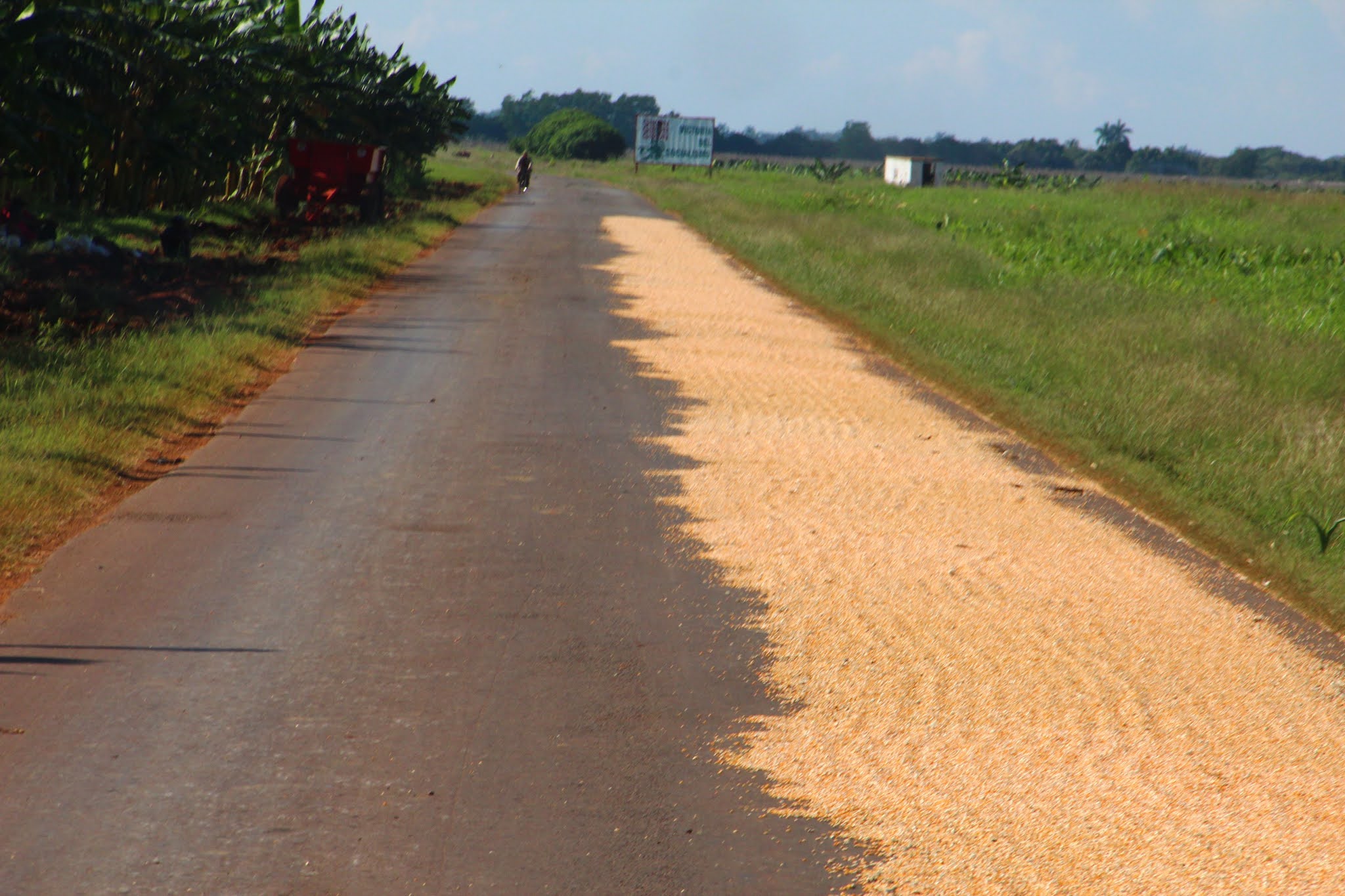
Cuba is not far from the Equator, just like Malaysia, so we have similar weather and thus vegetation. Their countryside is like ours, may be 40 or 50 years ago. No rain forest though as it is drier. There are 4-lane highways (2-lane each way) linking a few of the main cities but very few cars. There are flyovers constructed over the highways, some without any connecting roads. A good practice for easy future expanding of the lateral road links. But these links will never come as long as the US trade embargo is on. Shown one such no-road flyover, a rural road where half of it is used by the farmer to dry corns. Horse carts and donkey carts are the main transport "vehicles" in the rural areas.



** Now we go touring **

** Havana **
Havana is the capital with 2.2 million people.
Havana – La Habana Vieja
The old city, called Habana Vieja, is the largest colonial city in the whole of Latin America. It is a UNESCO World Heritage Site. Shown scenes of 3 squares here: Plaza de San Francisco, Plaza Vieja and Plaza de la Catedral with the last photo taken from the clock tower of the cathedral. The dark round things for demarcation in Plaza Vieja are in fact real cannon balls. Real old cannon bodies are used too, planted in an upright position.
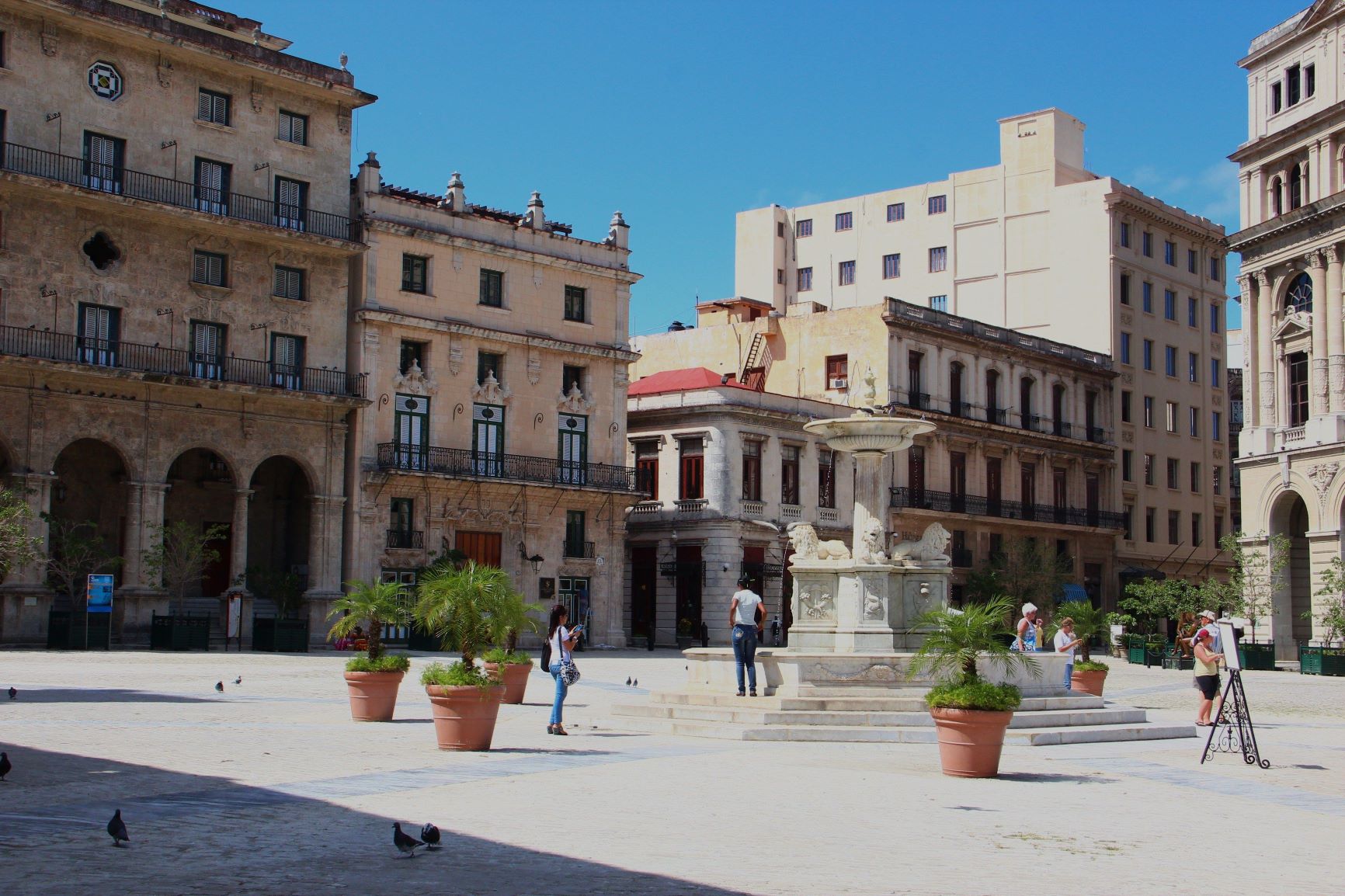

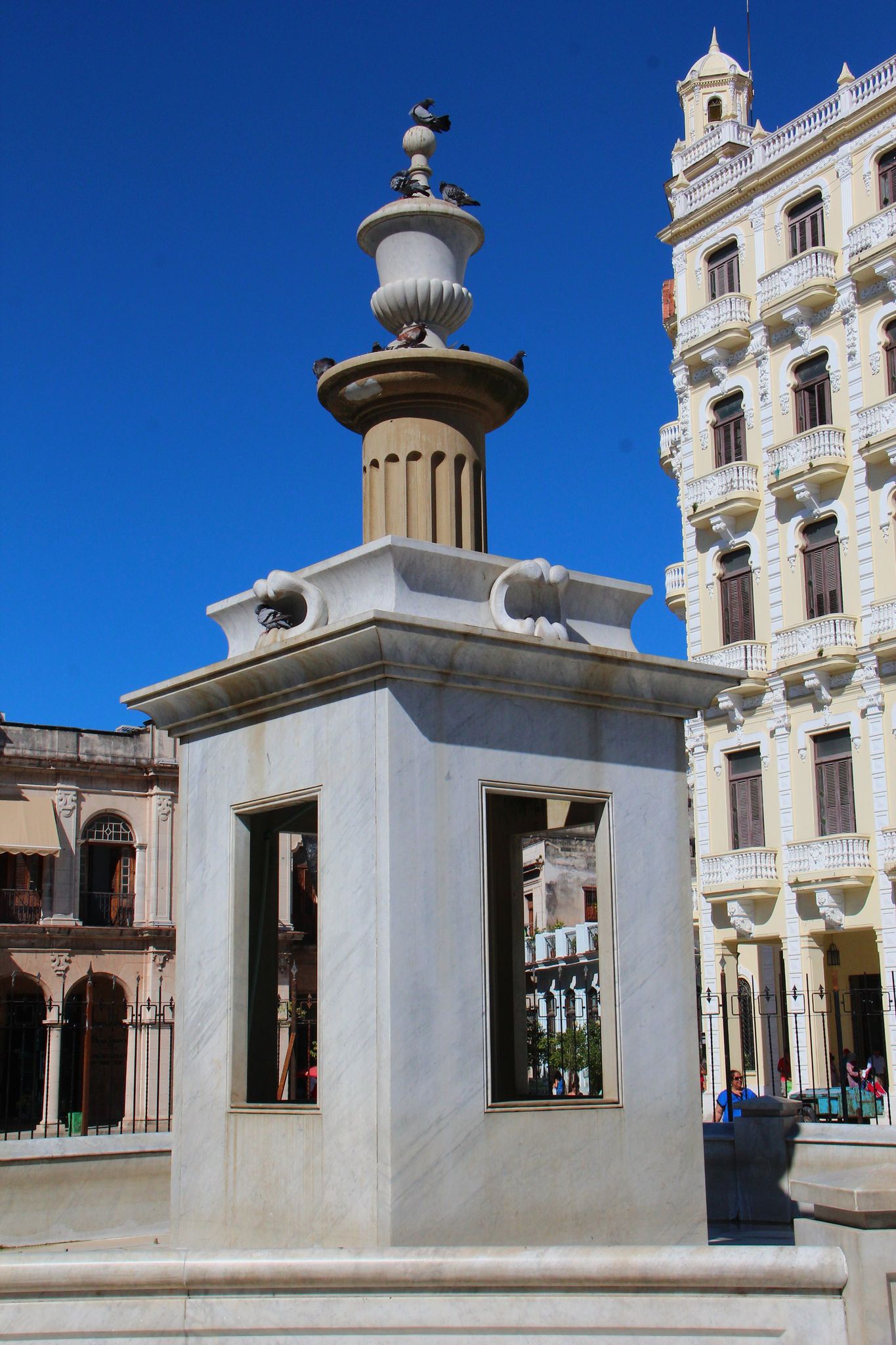
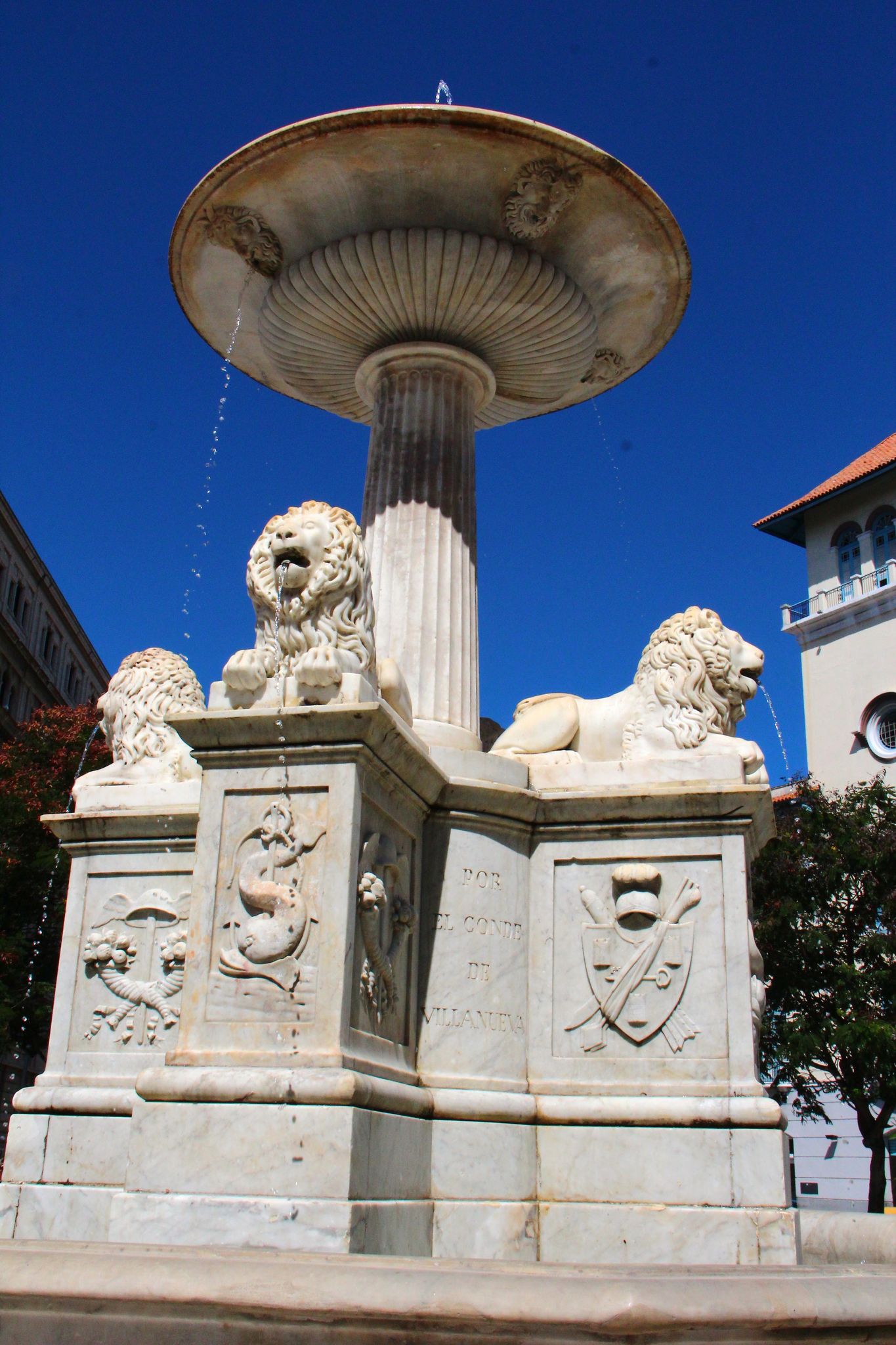


And what is common to all these plazas? All deserted. No tourists.
Havana – Paseo del Prado
This is said to be the most beautiful pedestrian-only boulevard in the city. It is in the “Prado” section. No car racing, but children racing. The buildings are quite typical of the commercial buildings in Havana.


Havana – Calle Obispo
Bishop Street is the main shopping street in the city. Nothing much on display really as the locals have no buying power. Shown the locals in a restaurant and white jars containing herbs in a pharmacy.


Havana – Museo de la Revolucion
The museum on “Revolution” is housed in the former presidential palace. Typical communist propaganda on the revolution to free the people from capitalism. Many old photos taken during the structure and lives of the key figures involved in the revolution, some killed during the struggle. And old weapons, equipment, etc.
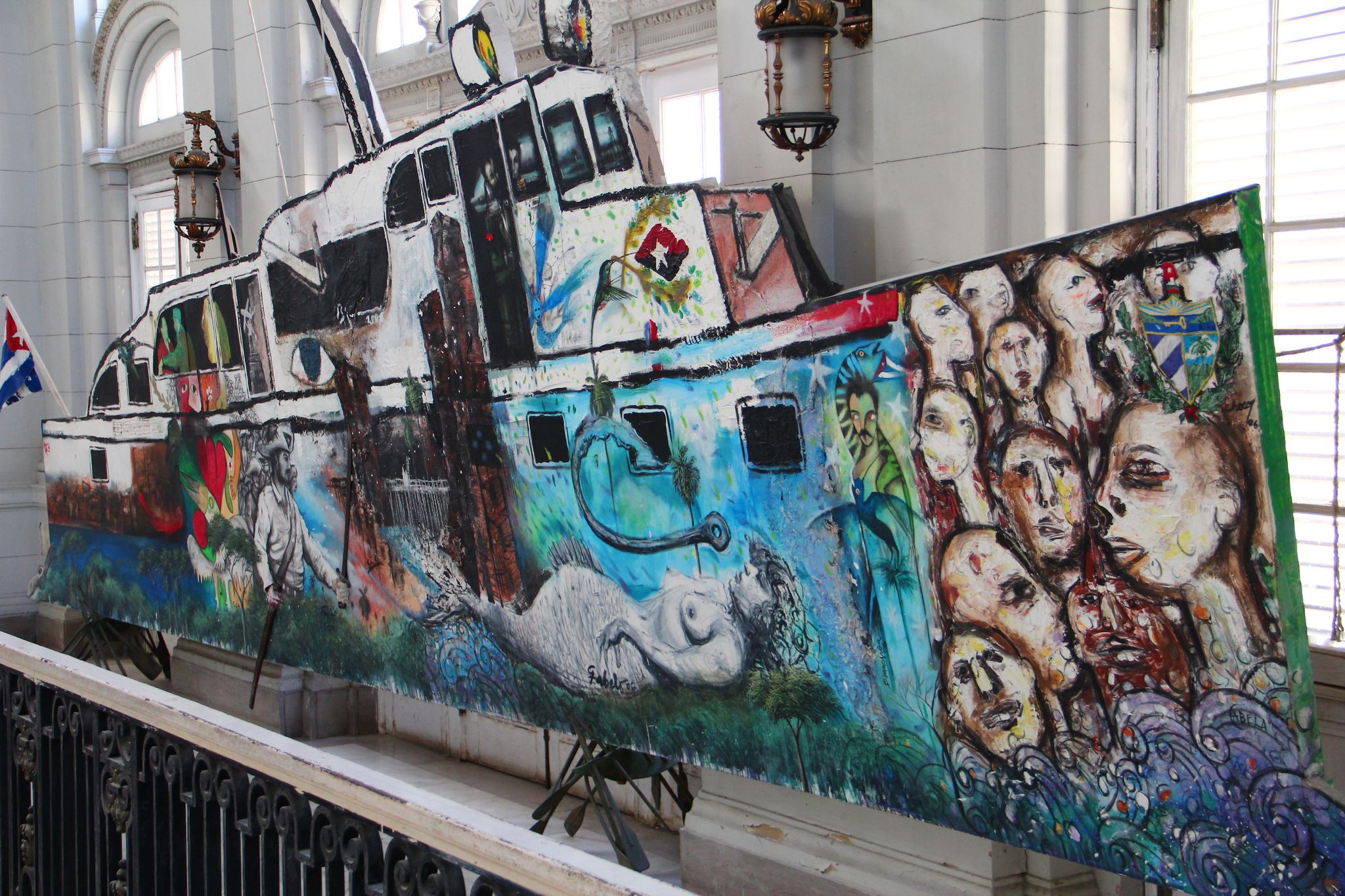
The mural showcases the famous junk used by Fidel Castro to start the revolution. The yacht was named “Granma”, designed for 12 people but 82 of Castro’s gang boarded it and it took them 10 days to sail from Mexico to Cuba to launch the 1st attack. The museum is also used for new lawyers to be called to the “Bar”, to defend the country’s revolution of course. The 2nd photo shows such a "Calling to the Bar" ceremony we happened to witness.

Havana – Museo Nacional de Bellas Artes
This is quite a famous museum of fine arts. No photography allowed in the galleries inside. Shown are exhibits in the courtyard. The marble sculpture is known as “Form, Space and Light” created by Rita Longa in 1953.


Havana – Callejon de Hamel
This is a street dedicated to murals and modern art. Exotic and interesting.


Havana – Barrio China
This is the Chinatown in Havana. The Chinese first came to Cuba in the mid-1800s. In fact there were 2,000 Cuban Chinese who joined the rebels to fight for independence in the late 1800s. The Chinese were almost 200,000 strong just before the revolution. After the communist took over, most of the Chinese left because there was no more private business to do. Didn’t see Chinese faces here. The statue is that of Confucius.


Havana – other notable structures
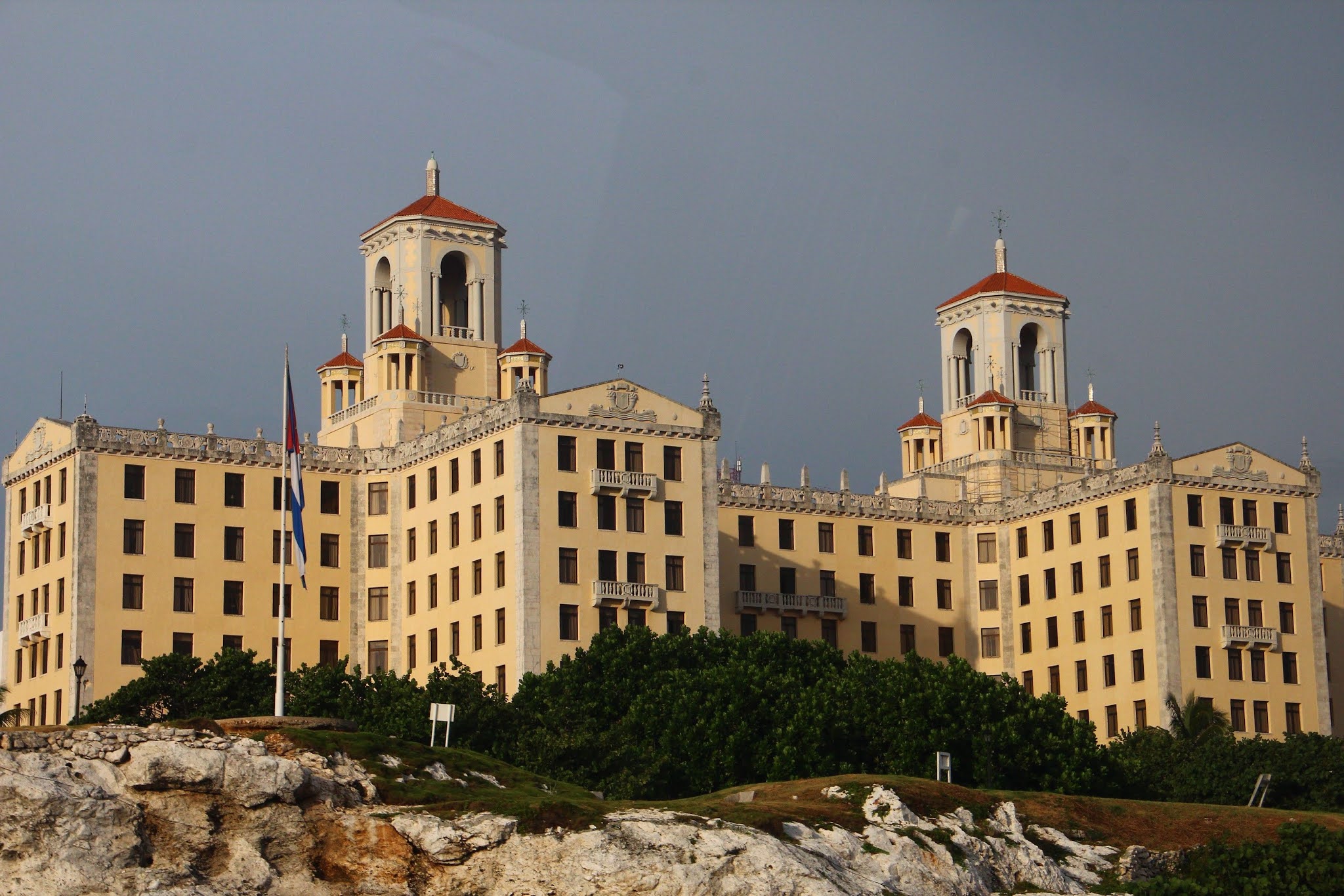
Two other notable structures in Havana we visited deserve to be mentioned. The first is the National Hotel, a 5-star hotel completed in 1930 by the sea front. Once the place to be. It was greatly neglected after the communist regime took over in 1959 as no Americans and Europeans could come. The other notable is the Jose Marti Memorial, which is a star-shaped tower 108 m high, with a statue of Jose Marti. It was completed in 1958. Jose Marti (1853-1895) was a Cuban giant in the literary field, being a poet, essayist, publisher, professor, etc. Considered a national hero in his involvement to achieve national independence.


** Other Places **
From Havana, we chartered a mini bus and engaged a guide, Mr Lazaro, to take us to other towns.
Vinales
Vinales is a town about 180 km west of Havana, located within the Vinales Valley. The Vinales Valley has a karst landscape and traditional agricultural activity (mainly tobacco) is still being followed. Rich in traditional craft, music and architecture. It is a UNESCO World Heritage Site. On the bus when we first met our guide, Mr Lazaro:
Laksa-lou: first I am taking you to see a tobacco plantation,
We: we have tobacco plantations in Malaysia lah!
Laksa-loh: ah-ha, then we go see some banana plants.
We: we have bananas also!
Laksa-lou: ah-ha, may be limestone caves
We: we have Batu Cave!
Laksa-lou: ah-ah-ha, then what for you come to Cuba?
We: we want to see communists!
The landscape is like our Kinta Valley, so photos not worthy to be shown.
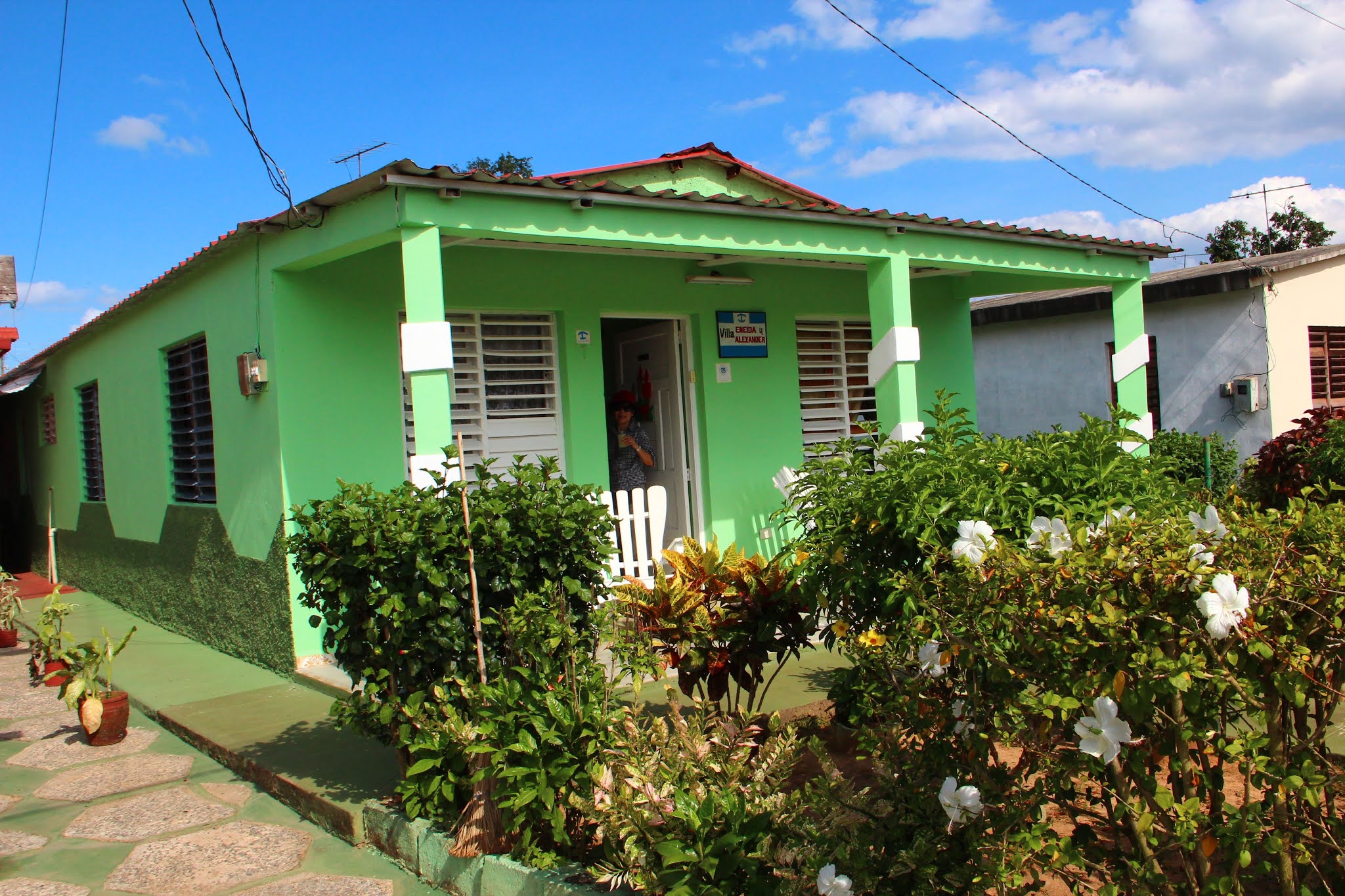
We stay 2 nights in the villagers’ homes, or home-stay. Shown the single-story homes. The problem we had, like other travel mates in adjacent homes, was low water pressure in the water supply. Quite difficult to take a simple bath. This home-stay concept was introduced only a few years ago. The government takes half of the rent paid or something, communist rule loh. It is a good practice though, the old folks still can make a few dollar from the vacant rooms. We are supposed to communicate with the hosts and learn something. But have you seen a chicken talking to a duck? But we did improve our skill in using sign languages. Our host, Senora Eneida stays alone.

Cienfuegos
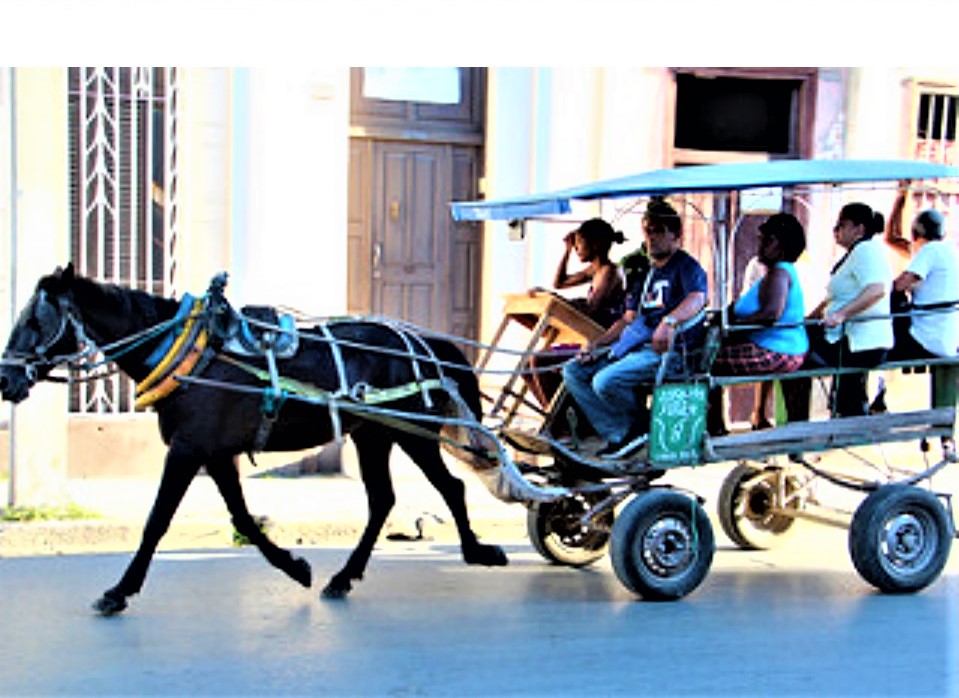
Cienfuegos is a town some 250 km south-east of Havana, with a population of about 160,000. The historic city center is also a UNESCO World Heritage Site, honour bestowed for its excellent urban-planning on the theme of Spanish Enlightenment in the early 19th century. Shown Plaza Marti, named after the Hero of Independence. The Plaza Marti is very much alive, not yet "mati". Shown a 1-horse-power taxi and a giant hair saloon without customers.



A famous building in town is the Palacio de Valle, the former residence of a sugar tycoon, now a hotel. Spanish architecture with Moorish elements.


Bay of Pigs
About 50 km west of Cienfuegos are the beaches facing the Bay of Pigs. On April 14, 1961, a group of 1,400 Cuban exiles, trained and armed by the CIA, left Nicaragua on 6 ships. The mission was to overthrow the communist regime. On the 2nd day, US bombers also attacked 3 military airports in Cuba. The exiles landed on these beaches 2 days later. But the Cuban army was ready for them, led by Castro himself. The locals were on the government's side too. The battle lasted only 3 days with the government forces the easy victors. A museum was built on the trunk road near the bay and we visited the place. The plane is a Hawker Sea Fury, a US fighter plane captured by the Cuban.


Sancti Spiritus
Sancti Spiritus (Holy Spirit) in Central Cuba is one of the oldest European settlements in the country. It is east of Cienfuegos, with a population of some 130,000. Shown the town center with classic colonial buildings, a famous bronze statue and a classroom in a shop building.


Santa Clara
Santa Clara,a city with 220,000 people, is some 60 km north of Cienfuegos. Geographically it is the center of the country. The most important tourist attraction is the Che Memorial. “Che” is the nick name of Ernesto Che Guevara (1928 – 1967) an Argentine Marxist revolutionary, physician and guerrilla fighter. While living in Mexico City he met Castro and his brother Rauf, and became a key figure in the group. Soon he became the 2nd in command. After the successful Cuban revolution he joined the government as a senior minister and played some key roles. He left Cuba in 1965 to “promote” Marxist revolution abroad. In 1967 while in Bolivia he was captured by the CIA and executed.
So you have fought and succeeded but you gave up the good life and position of power to fight in other arenas. And you sacrificed your only life. What a Hero! Or what a Fool! Just wonder would LGE give up his CM’s post in Penang in GE14 and go back to fight in his home state of Melaka? Likely not!
The famous image of Che, as photographed by Alberto Korda in 1960, is easily the most popular image in Cuba. Even in Guatemala and Mexico, books on Che or T-shirts with his image are found everywhere. The common poor all hope for another Che in a new revolution to help them to get out of poverty at this time when the wealth between the rich and the poor is unbearably wide. The last photo shows the Tren Blindada Memorial, a place where the guerrilla fighters, led by Che, derailed an armoured government train.


Trinidad
This is a coastal town of 72,000 people about 80 km south-east of Cienfuegos. The old town is a UNESCO World Heritage Site and a showcase of Spanish colonial architecture: cobble-stone streets, wrought-iron grilles, colourful walls, and donkey carts are the main mode of transport for the locals.


And views at the Main Plaza


Valley of the Sugar Mills
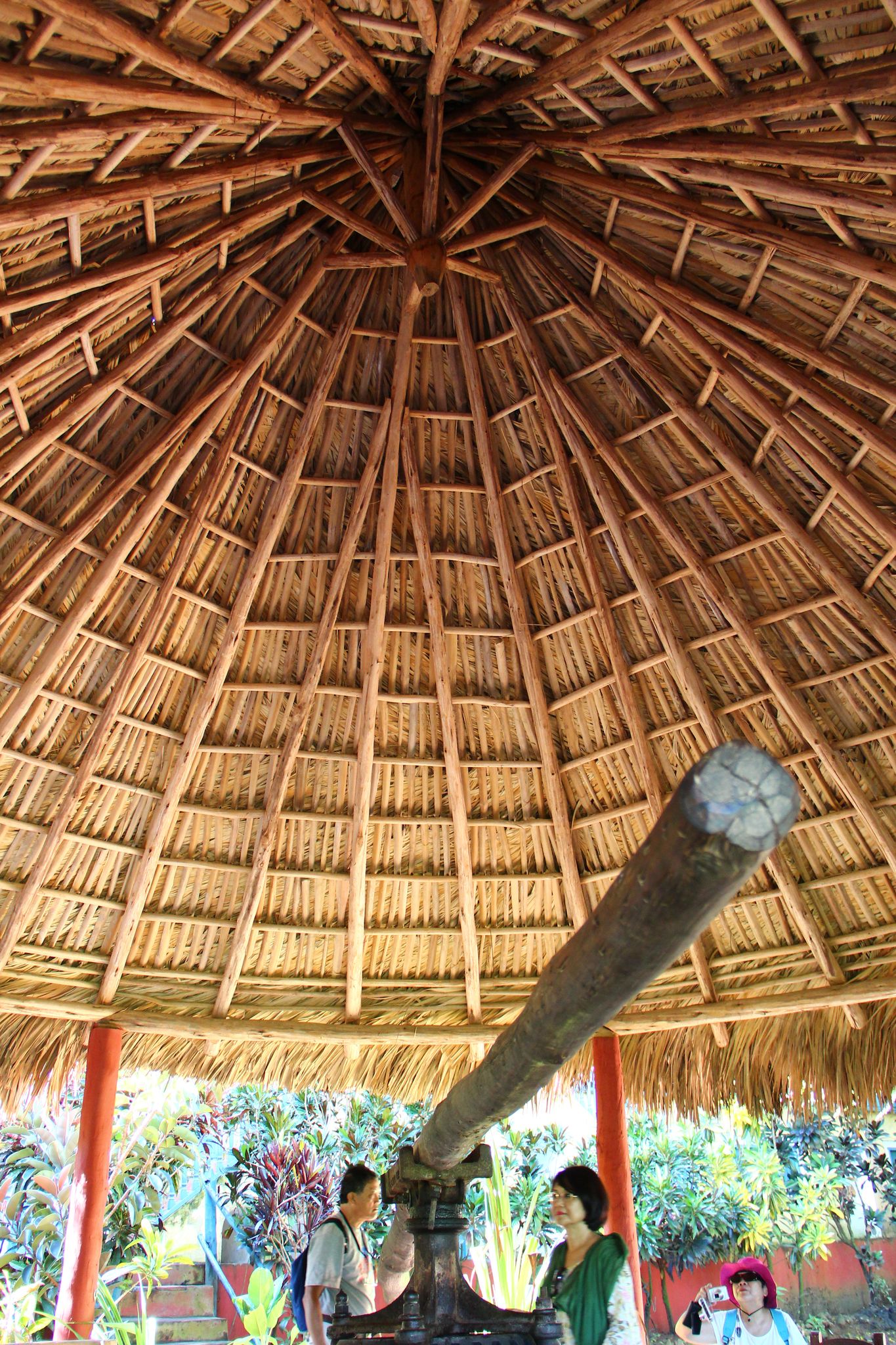
Just off the town of Trinidad is the Valley of the Sugar Mills, also a UNESCO World Heritage Site. It once had over 70 sugar mills. We visited the Manaca Iznaga Estate where the main factory building has been converted into a restaurant. The 3rd photo shows an old sugarcane press. The 46-m clock tower was built in 1816.



** More shots **
A few more photos showing the unique Cuba: the pregnant palm tree, a goat-cart, a set of delightful soft toys and a set of carved wooden figures working in a cigar factory, street vendors selling garlic and onions, the famous restaurant Bodeguita del Medio in Havana whose customers include heads of states of foreign countries.


PS: Sick in Cuba
2 days onto Cuba I was sick, having high fever for 2 days. High fever even after finishing a whole box of "Panadol". Simply a case of "water boh ngam with earth"水土不服, or dengue? I was frightened. Wanted to google for more info on dengue symptoms, but no internet connection in Cuba. Kena dengue, can die one you know! Die here? That is not a good option. Died in communist Cuba? The Malaysian government may ban my ashes to be taken back! Oh, I am not that important eh! But my wife says I am very important you know. Who is right? If I die here, that would cost a lot of money. What, dead already still think of your money? Oh, Lord, give me another month please. Don't let me die here. The old lady will be devastated. Will spoil the fun of the whole group too. The Lord does listen.